Stonewall's The Teachers' Report - Homophobic bullying in Britain’s schools -was published yesterday. Their Report deals with homophobia and homophobic bullying in primary and secondary school settings. Other than an investigative piece in The Guardian, so far there has been little interest in the findings of the YouGov survey upon which the Stonewall report is based. The BBC has not bothered with it and, as expected, it hasn't been mentioned by Newsround.
According to the Report, nine in ten secondary school teachers and more than two in five primary school teachers say children and young people, regardless of their sexual orientation, currently experience homophobic bullying, name calling or harassment in their schools. Three quarters of primary school teachers and 95% of secondary school teachers have heard the phrases 'you’re so gay' or 'that’s so gay' in their schools.
How does the BBC help perpetuate homophobic prejudice?
A relevant article by Simon Edge is to be found on pages 108-111 of March 2009's GT magazine. Simon is annoyed at the BBC, which he says is one of Britain's last great bastions of homophobia. His article, called Turned Off in homage to Stonewall's 2006 Tuned Out report (blog 28 February 2006), is a damning indictment of the Corporation. Simon goes into detail about the BBC's attitude to diversity, and ends by questioning the Corporation's coverage of Michael Causer's murder.
Simon Edge: Why didn’t they broadcast anything about Michael Causer?
I’m referred to press officer number five, who asks if anyone is accusing the BBC of homophobia over this. "Yes," I tell him: "both Peter Tatchell and Ben Summerskill, in a rare outbreak of unanimity." He will have to get back to me. And he does. But this time he doesn’t even have a written statement. Will any non-homophobic news editor explain why Causer’s murder mattered less than that of every other teenager killed last summer?
Wednesday, March 11, 2009


Monday, March 09, 2009
BBC and coverage of LGBT History Month (part 2)
The first report on the Inside Out programme (BBC One, London, 25 Feb 2009) was by journalist David Akinsanya. A few years ago David made a documentary for the BBC called Sad To Be Gay. So needless to say, his report was hardly a celebration of LGBT History Month.
Although one of the BBC's Values begins: "We respect each other and celebrate our diversity," the Corporation takes these words less conscientiously in regard to the LGBT community. Thus, in order to imply 'neutrality' Inside Out occasionally used terms like homosexuality, as well as talking about lesbian and gay people (see comment by Tony Fenwick in previous blog)
Drama teacher Jo Letson, talking about Romeo and Julian, her adaption of the Shakespeare play: At the beginning it was a novelty for the kids. And then, as we started doing the project, as we started looking at the language and the words, it kind of developed into something else. The kids started to look at it, and started to really feel that this is about tolerance.
David Akinsanya: You may think this focus on sexuality in schools is new, but actually something similar was tried over twenty years ago.... So according to Akinsanya, and as with CBBC, relationships become sexual when they're lesbian and gay relationships.
Akinsanya claimed that "just five years ago teachers were forbidden from even using the word 'gay' in classrooms." Not true, although at the time many teachers felt that to be the case. What is certainly true, however, is that BBC children's TV today has a de facto ban on using words such as 'lesbian' and 'gay'
The first report on the Inside Out programme (BBC One, London, 25 Feb 2009) was by journalist David Akinsanya. A few years ago David made a documentary for the BBC called Sad To Be Gay. So needless to say, his report was hardly a celebration of LGBT History Month.
Although one of the BBC's Values begins: "We respect each other and celebrate our diversity," the Corporation takes these words less conscientiously in regard to the LGBT community. Thus, in order to imply 'neutrality' Inside Out occasionally used terms like homosexuality, as well as talking about lesbian and gay people (see comment by Tony Fenwick in previous blog)
Drama teacher Jo Letson, talking about Romeo and Julian, her adaption of the Shakespeare play: At the beginning it was a novelty for the kids. And then, as we started doing the project, as we started looking at the language and the words, it kind of developed into something else. The kids started to look at it, and started to really feel that this is about tolerance.
David Akinsanya: You may think this focus on sexuality in schools is new, but actually something similar was tried over twenty years ago.... So according to Akinsanya, and as with CBBC, relationships become sexual when they're lesbian and gay relationships.
Akinsanya claimed that "just five years ago teachers were forbidden from even using the word 'gay' in classrooms." Not true, although at the time many teachers felt that to be the case. What is certainly true, however, is that BBC children's TV today has a de facto ban on using words such as 'lesbian' and 'gay'
Thursday, March 05, 2009
BBC and coverage of LGBT History Month (part 1)
There were no items about LGBT History Month on Newsround during February. So no surprises there.
Now let's look at coverage on some other BBC TV programmes. Firstly there was The Big Questions on Sunday 1 February 2009. The second 'big question' that day was "Is homosexuality a cause for celebration?"
Nicky Campbell kicked off the debate asking why celebrate something that is "none of anyone else's business?" But if Nicky was still at school and friends asked him who he fancied, would he tell them it's none of their business? And when someone likes someone else, is there any point in hoping for a relationship when their sexual orientations aren't compatible? So of course these matters are other people's business.
Tony Fenwick, from Schools Out, said "We need to celebrate homosexuality, as you put it - I would prefer you to say being lesbian and gay, because 'homosexuality' is a term that was coined in the Victorian era to describe what was then thought of as a disease. But it's a question of being - we are gay and we are lesbian and that's how we turn out."
One of the guests on the programme was Peter Tatchell.
There were no items about LGBT History Month on Newsround during February. So no surprises there.
Now let's look at coverage on some other BBC TV programmes. Firstly there was The Big Questions on Sunday 1 February 2009. The second 'big question' that day was "Is homosexuality a cause for celebration?"
Nicky Campbell kicked off the debate asking why celebrate something that is "none of anyone else's business?" But if Nicky was still at school and friends asked him who he fancied, would he tell them it's none of their business? And when someone likes someone else, is there any point in hoping for a relationship when their sexual orientations aren't compatible? So of course these matters are other people's business.
Tony Fenwick, from Schools Out, said "We need to celebrate homosexuality, as you put it - I would prefer you to say being lesbian and gay, because 'homosexuality' is a term that was coined in the Victorian era to describe what was then thought of as a disease. But it's a question of being - we are gay and we are lesbian and that's how we turn out."
One of the guests on the programme was Peter Tatchell.
Wednesday, March 04, 2009
One of the reports on Newsround yesterday was about a new service to help kids who are bullied. Kids can log on to the site and get help from specially trained mentors.
This evening's Newsround reports on BBC One began with news of the Sri Lankan cricket team returning after the attack in Pakistan. Ore said "In the middle of the night the Sri Lankan team arrived home, their anxious wives and families waiting for them, relieved to be out of Pakistan."
The second story was about the conviction of a man for the murder of 18 year old actor Robert Knox. Another item was about Sol Campbell urging more kids to go to live sports and not just watch on TV. And after Ricky's report on Monday about reducing the packaging for Easter eggs, today's programme had him telling us about Fair Trade chocolate.
Newsround BBC One 5.05pm - 4 March 2009
Sri Lankan cricket team return home [2'06"]
Man guilty of murdering 18 yr old Robert Knox [0'13"]
ITV has money problems [0'13"]
Dani Harmer wants to be a pop star [0'15"]
Sol Campbell wants more kids to watch live sport [1'57"]
Fair Trade chocolate [1'52"]
Giant lump of popcorn [0'19"]
This evening's Newsround reports on BBC One began with news of the Sri Lankan cricket team returning after the attack in Pakistan. Ore said "In the middle of the night the Sri Lankan team arrived home, their anxious wives and families waiting for them, relieved to be out of Pakistan."
The second story was about the conviction of a man for the murder of 18 year old actor Robert Knox. Another item was about Sol Campbell urging more kids to go to live sports and not just watch on TV. And after Ricky's report on Monday about reducing the packaging for Easter eggs, today's programme had him telling us about Fair Trade chocolate.
Newsround BBC One 5.05pm - 4 March 2009
Sri Lankan cricket team return home [2'06"]
Man guilty of murdering 18 yr old Robert Knox [0'13"]
ITV has money problems [0'13"]
Dani Harmer wants to be a pop star [0'15"]
Sol Campbell wants more kids to watch live sport [1'57"]
Fair Trade chocolate [1'52"]
Giant lump of popcorn [0'19"]
Saturday, February 28, 2009
How many months of the year have thirty days in them?
That was Question 6 on yesterday's edition of the CBBC quiz show Get 100. "It may not be as straightforward as it sounds," said presenter, Hardeep. With a puzzled expression on her face contestant Siobhan asked "is it four?"
"It's not four," said Hardeep, as he moved on to the next contestant. Harrison suggested three as an answer, Samantha said five, and Lucy's guess was six.
"The answer is eleven. That's a trick question," Hardeep explained, "because eleven months have thirty days. Some have more than thirty days, but eleven have at least thirty days."
What's CBBC up to? It looks like they're giving lessons on how to cheat and deceive. Next thing you know they'll shut down half of the message boards and tell kids it's part of improvements to the website.
That was Question 6 on yesterday's edition of the CBBC quiz show Get 100. "It may not be as straightforward as it sounds," said presenter, Hardeep. With a puzzled expression on her face contestant Siobhan asked "is it four?"
"It's not four," said Hardeep, as he moved on to the next contestant. Harrison suggested three as an answer, Samantha said five, and Lucy's guess was six.
"The answer is eleven. That's a trick question," Hardeep explained, "because eleven months have thirty days. Some have more than thirty days, but eleven have at least thirty days."
What's CBBC up to? It looks like they're giving lessons on how to cheat and deceive. Next thing you know they'll shut down half of the message boards and tell kids it's part of improvements to the website.
Thursday, February 26, 2009
I came across this post on Newsround's Showbiz message board. I don't watch CBeebies so I'd never heard of Cerrie. I did a quick google and found out more about her.
Ironically, the Daily Mail, which just a few weeks ago was running what amounted to a vicious hate campaign against gay people adopting, now has a piece entitled It's not Cerrie Burnell who's a threat to children - it's their bigoted parents.
Ironically, the Daily Mail, which just a few weeks ago was running what amounted to a vicious hate campaign against gay people adopting, now has a piece entitled It's not Cerrie Burnell who's a threat to children - it's their bigoted parents.
Tuesday, February 24, 2009
The shocking 'not guilty' verdict in the case of Michael Causer prompted a protest outside Liverpool Crown Court on Sunday. A large crowd of people expressed their shock and outrage. Whilst the local press had given some coverage to the crime and trial, there was very little interest elsewhere.
The Independent reports Stonewall's Ben Summerskill as saying "It is testament to the lack of seriousness with which these kinds of incidents are treated. They are simply not regarded as newsworthy. The BBC has reported every single murder of an adolescent in the past 18 months in this country as a national news story, but not this one."
Ben Summerskill could be right up to a point. There is a pervasive atmosphere of homophobia in society, exemplified by this detestable verdict as well as the national media's reluctance to report the injustice.
The Independent reports Stonewall's Ben Summerskill as saying "It is testament to the lack of seriousness with which these kinds of incidents are treated. They are simply not regarded as newsworthy. The BBC has reported every single murder of an adolescent in the past 18 months in this country as a national news story, but not this one."
Ben Summerskill could be right up to a point. There is a pervasive atmosphere of homophobia in society, exemplified by this detestable verdict as well as the national media's reluctance to report the injustice.
Monday, February 23, 2009
Causing confusion
Kids could be forgiven for being rather confused about where they stand with CBBC's Newsround at the moment. For a start loads of message boards were closed down in December, in a move which the BBC described as an improvement. And Newsround has normally made a point of not reporting on films with certificate 15 or 18.
When, yesterday, Newsround asked which films would win at your Oscars? their web page stated that most of the nominations were for "long, boring films that you lot aren't allowed to see."
But today the programme reported on awards for two certificate 15 films, Slumdog Millionaire and The Reader, which they'd seemingly put down in such a patronising way.
Sonali: It was the Oscars last night and British talent came out on top. Slumdog Millionaire won eight awards....
It's not clear whether kids who had seen any certificate 15 films could mention them as part of the feedback or on the message boards. But, to my mind, and I'm sure to lots of kids also, Newsround is a bit mixed up at the moment.
Kids could be forgiven for being rather confused about where they stand with CBBC's Newsround at the moment. For a start loads of message boards were closed down in December, in a move which the BBC described as an improvement. And Newsround has normally made a point of not reporting on films with certificate 15 or 18.
When, yesterday, Newsround asked which films would win at your Oscars? their web page stated that most of the nominations were for "long, boring films that you lot aren't allowed to see."
But today the programme reported on awards for two certificate 15 films, Slumdog Millionaire and The Reader, which they'd seemingly put down in such a patronising way.
Sonali: It was the Oscars last night and British talent came out on top. Slumdog Millionaire won eight awards....
It's not clear whether kids who had seen any certificate 15 films could mention them as part of the feedback or on the message boards. But, to my mind, and I'm sure to lots of kids also, Newsround is a bit mixed up at the moment.
Saturday, February 21, 2009
LGBT History Month - Michael Causer
Michael Causer, a gay teenager living near Liverpool, was the victim of a homophobic hate crime last year. Yesterday, despite overwhelming evidence, Gavin Alker was acquitted of killing Michael.
Michael Causer, a gay teenager living near Liverpool, was the victim of a homophobic hate crime last year. Yesterday, despite overwhelming evidence, Gavin Alker was acquitted of killing Michael.
Monday, February 16, 2009
LGBT History Month - Samuel Delany
Samuel Delany is an academic, literary critic and science fiction writer who has made extensive and innovative contributions to the sci-fi oeuvre, including The Einstein Intersection and Triton. Also known as Chip Delany he was born in April 1942 and raised in New York. He married Marilyn Hacker, a poet, in 1961 and they have one daughter. He had met his future wife in High School - Bronx Science - which continues to attract gifted students.
Marilyn Hacker identifies as lesbian, and Chip Delany as gay since his adolescence. He's written of his experiences as a black gay man on several occasions, including in The Motion of Light in Water: Sex and Science Fiction Writing in the East Village, where he describes meeting WH Auden, Bob Dylan and Albert Einstein, as well as his experiences in an open marriage.
Hazel Carby, who is Professor of African American Studies at Yale, uses Delany's The Motion of Light in Water to present some alternative approaches to challenging heterosexual norms pursued by gay men. In Race Men she characterises Delany's work as absolutely central to any consideration of black manhood. The Lambda Book Report chose Delany as one of the fifty most significant men and women of the past hundred years to change our concept of gayness.
Samuel Delany is an academic, literary critic and science fiction writer who has made extensive and innovative contributions to the sci-fi oeuvre, including The Einstein Intersection and Triton. Also known as Chip Delany he was born in April 1942 and raised in New York. He married Marilyn Hacker, a poet, in 1961 and they have one daughter. He had met his future wife in High School - Bronx Science - which continues to attract gifted students.
Marilyn Hacker identifies as lesbian, and Chip Delany as gay since his adolescence. He's written of his experiences as a black gay man on several occasions, including in The Motion of Light in Water: Sex and Science Fiction Writing in the East Village, where he describes meeting WH Auden, Bob Dylan and Albert Einstein, as well as his experiences in an open marriage.
Hazel Carby, who is Professor of African American Studies at Yale, uses Delany's The Motion of Light in Water to present some alternative approaches to challenging heterosexual norms pursued by gay men. In Race Men she characterises Delany's work as absolutely central to any consideration of black manhood. The Lambda Book Report chose Delany as one of the fifty most significant men and women of the past hundred years to change our concept of gayness.
Wednesday, February 11, 2009
Internet safety and BBC children's services
Yesterday was EU Internet Safety Day, and Newsround gave some helpful advice to kids about how to stay safe online. This report was from the BBC One programme at 5pm -
(studio) Sonali: Loads of us chat to our mates online. For most of us it's a great way to stay in touch, but for Georgia it turned into a complete nightmare. She was bullied on social networking sites, and has been telling Maddy all about it.
(video report) Maddy: Georgia was bullied online for about six months. Girls she'd known for ages started sending her nasty messages on MSN and Bebo.
Georgia: They were calling me fat and making me believe that I was fat. And it would just carry on from there. Stuff like "if you hate Georgia sign here." And she would get people to sign stuff and make hate mail. When my mum and dad went out and I would shut the door, close the curtains, turn the lights off and make sure it was all dark, and I would just scream to get all my anger out of me.
Maddy: Most kids don't get as badly bullied as Georgia, but it is a big problem. You're not exactly going to chuck your computers away though. So how do you make sure what you're doing in cyberspace is safe?
Boy: If you're gonna go on Bebo or MSN, add people you know and trust.
Girl: I think we could have it in the living room so your mum and parents can watch over you. And it's simpler, so they know what you're doing and see if you're safe. And if you're not they can tell you to come off of that.
Maddy: Seventeen social networking sites have just promised to do more to protect people who use them. If you still end up being bullied, the advice is tell someone. Save the messages and don't reply to any of them.
Georgia: My message to anyone that's being bullied is to speak up. Tell your mum, your dad, it may feel awful but it's something you've got to do, you can't go through it alone. And the message to the bullies - it's not big, it's not clever, and you may think it's a bit of fun, it's a joke, it's really not to the bully victim. It means everything to them.
(studio) Sonali: Well, if you're worried about being bullied on the 'net, head over to our website for more advice.
----- The trouble is that at the end of last year CBBC closed down lots of safe and well used message boards, describing the changes as improvements. No kids were fooled, however, and there were hundreds of complaints about the closures. Newsround apparently didn't have enough time to investigate.
I requested that the BBC Trust look into this as part of their consultation into children's and young people's services. They refused to countenance my suggestion.
The first part of the Trust's consultation was published yesterday, though not reported by Newsround despite a major publicity drive on CBBC in the autumn to get feedback from under 12 year olds.
Amongst the Trust findings was that programmes like Newsround and Blue Peter are losing audiences.
Yesterday was EU Internet Safety Day, and Newsround gave some helpful advice to kids about how to stay safe online. This report was from the BBC One programme at 5pm -
(studio) Sonali: Loads of us chat to our mates online. For most of us it's a great way to stay in touch, but for Georgia it turned into a complete nightmare. She was bullied on social networking sites, and has been telling Maddy all about it.
(video report) Maddy: Georgia was bullied online for about six months. Girls she'd known for ages started sending her nasty messages on MSN and Bebo.
Georgia: They were calling me fat and making me believe that I was fat. And it would just carry on from there. Stuff like "if you hate Georgia sign here." And she would get people to sign stuff and make hate mail. When my mum and dad went out and I would shut the door, close the curtains, turn the lights off and make sure it was all dark, and I would just scream to get all my anger out of me.
Maddy: Most kids don't get as badly bullied as Georgia, but it is a big problem. You're not exactly going to chuck your computers away though. So how do you make sure what you're doing in cyberspace is safe?
Boy: If you're gonna go on Bebo or MSN, add people you know and trust.
Girl: I think we could have it in the living room so your mum and parents can watch over you. And it's simpler, so they know what you're doing and see if you're safe. And if you're not they can tell you to come off of that.
Maddy: Seventeen social networking sites have just promised to do more to protect people who use them. If you still end up being bullied, the advice is tell someone. Save the messages and don't reply to any of them.
Georgia: My message to anyone that's being bullied is to speak up. Tell your mum, your dad, it may feel awful but it's something you've got to do, you can't go through it alone. And the message to the bullies - it's not big, it's not clever, and you may think it's a bit of fun, it's a joke, it's really not to the bully victim. It means everything to them.
(studio) Sonali: Well, if you're worried about being bullied on the 'net, head over to our website for more advice.
I requested that the BBC Trust look into this as part of their consultation into children's and young people's services. They refused to countenance my suggestion.
The first part of the Trust's consultation was published yesterday, though not reported by Newsround despite a major publicity drive on CBBC in the autumn to get feedback from under 12 year olds.
Amongst the Trust findings was that programmes like Newsround and Blue Peter are losing audiences.
Tuesday, February 10, 2009
LGBT History Month - Harvey Milk
Harvey Milk was an American politician, the first openly gay man to be elected to public office in California. He was born in May 1930 in Long Island, New York and had an older brother called Robert. In his early years he was guarded about being gay and stayed in the 'closet' to his family. He qualified as a maths teacher and joined the US Navy as a diver after graduation.
Milk tried to keep his New York romantic life separate from his family and work. Later he thought of moving to Miami to marry a lesbian friend to have ... a front & each would not be in the way of the other. By nature a right of centre conservative, Harvey was heavily influenced by the counterculture of the sixties and grew his hair long. He decided to move to San Francisco, California with his younger partner Scott Smith when he was about 40. Together they opened a camera shop in Castro Street called 'Castro Camera.'
San Francisco had been an epicentre for the hippie culture of the sixties, and LGBT economic power was growing in the seventies. Milk, now openly gay, became a passionate advocate of equal rights, and decided to fight for them politically. By this time there were estimated to be between 100,000 and 200,000 LGBT people in San Francisco and many of Harvey's opponents were also gay. But in contrast to the I'm a businessman who happens to be gay attitude, Harvey proclaimed we don't want sympathetic liberals, we want gays to represent gays. He realised that radical change was needed to eliminate prejudice and discrimination.
There is a biography of Harvey Milk called The Mayor of Castro Street. An acclaimed film of his life, Milk, was released recently.
Harvey Milk was an American politician, the first openly gay man to be elected to public office in California. He was born in May 1930 in Long Island, New York and had an older brother called Robert. In his early years he was guarded about being gay and stayed in the 'closet' to his family. He qualified as a maths teacher and joined the US Navy as a diver after graduation.
Milk tried to keep his New York romantic life separate from his family and work. Later he thought of moving to Miami to marry a lesbian friend to have ... a front & each would not be in the way of the other. By nature a right of centre conservative, Harvey was heavily influenced by the counterculture of the sixties and grew his hair long. He decided to move to San Francisco, California with his younger partner Scott Smith when he was about 40. Together they opened a camera shop in Castro Street called 'Castro Camera.'
San Francisco had been an epicentre for the hippie culture of the sixties, and LGBT economic power was growing in the seventies. Milk, now openly gay, became a passionate advocate of equal rights, and decided to fight for them politically. By this time there were estimated to be between 100,000 and 200,000 LGBT people in San Francisco and many of Harvey's opponents were also gay. But in contrast to the I'm a businessman who happens to be gay attitude, Harvey proclaimed we don't want sympathetic liberals, we want gays to represent gays. He realised that radical change was needed to eliminate prejudice and discrimination.
There is a biography of Harvey Milk called The Mayor of Castro Street. An acclaimed film of his life, Milk, was released recently.
Wednesday, February 04, 2009
LGBT History Month - Jóhanna Sigurðardóttir
Today's LGBT History Month personality is the new prime minister of Iceland, Jóhanna Sigurðardóttir. Although only an interim leader, many see her appointment as a milestone. Up until now, says the BBC News website, should a lesbian or gay man have been prime minister they'd have done their best to conceal the fact.
Some believe that Margaret Thatcher's predecessor as Tory party leader, Edward Heath was gay although Mr Heath never publicly confirmed this. Another British PM from much earlier, William Pitt the Younger, was also rumoured to be gay. Considering that LGBT people make up a significant percentage of the world's population there have no doubt been many other LGBT heads of government and heads of state around the world throughout history. Even today, for some, it's difficult to be open and honest about LGBT lives and circumstances.
Jóhanna Sigurðardóttir was born in Reykjavik in October 1942. She worked as a flight attendant and was active in the trade union movement before being elected to the Icelandic parliament as a Social Democrat in 1978. She is divorced and has two sons, and lives with her partner, Jónína Leósdóttir, who is an author and playright.
Today's LGBT History Month personality is the new prime minister of Iceland, Jóhanna Sigurðardóttir. Although only an interim leader, many see her appointment as a milestone. Up until now, says the BBC News website, should a lesbian or gay man have been prime minister they'd have done their best to conceal the fact.
Some believe that Margaret Thatcher's predecessor as Tory party leader, Edward Heath was gay although Mr Heath never publicly confirmed this. Another British PM from much earlier, William Pitt the Younger, was also rumoured to be gay. Considering that LGBT people make up a significant percentage of the world's population there have no doubt been many other LGBT heads of government and heads of state around the world throughout history. Even today, for some, it's difficult to be open and honest about LGBT lives and circumstances.
Jóhanna Sigurðardóttir was born in Reykjavik in October 1942. She worked as a flight attendant and was active in the trade union movement before being elected to the Icelandic parliament as a Social Democrat in 1978. She is divorced and has two sons, and lives with her partner, Jónína Leósdóttir, who is an author and playright.
Sunday, February 01, 2009
LGBT History Month - Greta Garbo
The first day of LGBT History Month, and Newsround Blog will be marking the event. I'm not sure the same will be true of Newsround itself but let's hope so.
Greta Garbo was a star in silent movies of the 1920s. She was born on the Stockholm island of Södermalm in September 1905. She had an older brother Sven, and an older sister Alva. Her earliest films were made in Sweden, but it is her work in the United States for which Greta Garbo is most famous. Grand Hotel was in effect an archetype of modern-day TV soaps. In it Garbo portrays a ballerina with depression and self-doubts. She wants to be alone, but falls in love with a man who turns out to be a thief.
Another of Garbo's great roles is Queen Christina, directed by Rouben Mamoulian. In the first still below Queen Christina is seen kissing her lady-in-waiting, Countess Ebba (played by Elizabeth Young).

The picture on the right is from the outstanding final scene of Queen Christina, as the camera zooms in on Garbo's face. Bereft, she seems like the figurehead of a ship setting out on a forlorn journey.
The first day of LGBT History Month, and Newsround Blog will be marking the event. I'm not sure the same will be true of Newsround itself but let's hope so.
Greta Garbo was a star in silent movies of the 1920s. She was born on the Stockholm island of Södermalm in September 1905. She had an older brother Sven, and an older sister Alva. Her earliest films were made in Sweden, but it is her work in the United States for which Greta Garbo is most famous. Grand Hotel was in effect an archetype of modern-day TV soaps. In it Garbo portrays a ballerina with depression and self-doubts. She wants to be alone, but falls in love with a man who turns out to be a thief.
Another of Garbo's great roles is Queen Christina, directed by Rouben Mamoulian. In the first still below Queen Christina is seen kissing her lady-in-waiting, Countess Ebba (played by Elizabeth Young).

The picture on the right is from the outstanding final scene of Queen Christina, as the camera zooms in on Garbo's face. Bereft, she seems like the figurehead of a ship setting out on a forlorn journey.
Wednesday, January 28, 2009
Half a century ago black people in the United States often suffered discrimination. Today there is a black President in the White House. But despite all the hard work Obama personally put into achieving this, he wouldn't have become President without the efforts of Americans, of all races, who recognised injustice and were determined to put things right. Martin Luther King was not alone, and he was by no means the first.
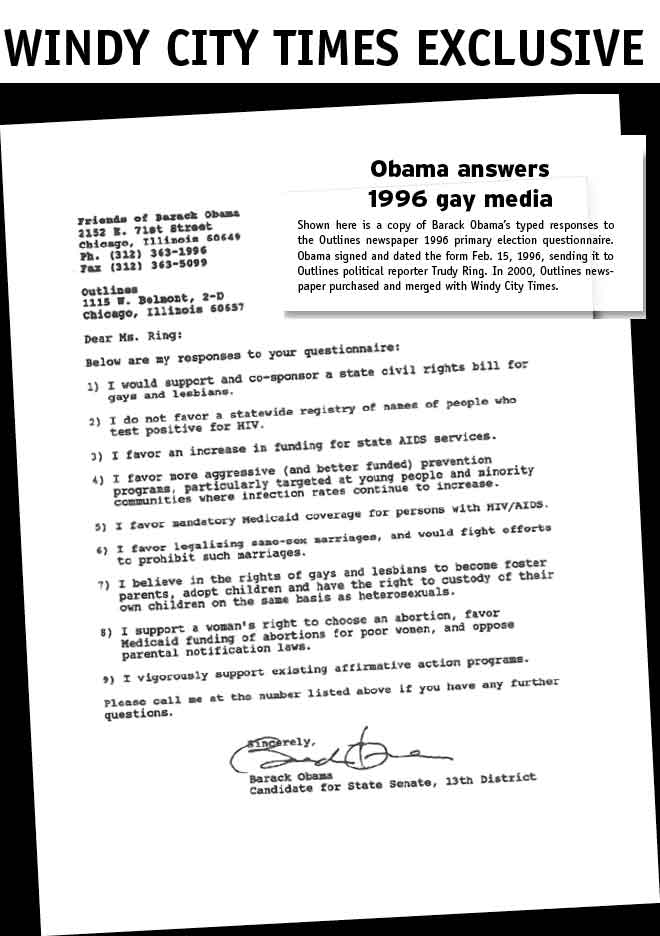
In 1996 Obama was a Democratic Party candidate in a local election. He was sent a questionnaire to find out his views on LGBT issues, and replied in an unequivocal way. Amongst his promises was to support same-sex marriages and "fight efforts to prohibit such marriages." In the 2008 Presidential election campaign, however, his stance was somewhat less positive. In fact he had reversed his 1996 position. A month before the Presidential election, his running mate, Joe Biden, was asked if he supported gay marriage. The answer was: "No. Barack Obama nor I support redefining, from a civil side, what constitutes marriage. We do not support that." (YouTube video)
A significant figure in the struggle for equality, and a friend of Martin Luther King, was Bayard Rustin. Towards the end of his life, Rustin came to believe that the gay community was a barometer of human rights - it was, he said, "the community which is most easily mistreated." (blog 3 February 2007)
Since becoming president last week, Obama has put a statement of his civil rights beliefs and policies on the White House website. Much of what he says looks encouraging.
Newsround Blog will be marking UK LGBT History Month, which begins in just a few days.
In 1996 Obama was a Democratic Party candidate in a local election. He was sent a questionnaire to find out his views on LGBT issues, and replied in an unequivocal way. Amongst his promises was to support same-sex marriages and "fight efforts to prohibit such marriages." In the 2008 Presidential election campaign, however, his stance was somewhat less positive. In fact he had reversed his 1996 position. A month before the Presidential election, his running mate, Joe Biden, was asked if he supported gay marriage. The answer was: "No. Barack Obama nor I support redefining, from a civil side, what constitutes marriage. We do not support that." (YouTube video)
A significant figure in the struggle for equality, and a friend of Martin Luther King, was Bayard Rustin. Towards the end of his life, Rustin came to believe that the gay community was a barometer of human rights - it was, he said, "the community which is most easily mistreated." (blog 3 February 2007)
Since becoming president last week, Obama has put a statement of his civil rights beliefs and policies on the White House website. Much of what he says looks encouraging.
Newsround Blog will be marking UK LGBT History Month, which begins in just a few days.
Wednesday, January 21, 2009
Ofcom’s Second Public Service Broadcasting Review
Ofcom has published its recommendations for the future of public service broadcasting in the UK. The Government is expected to respond to the recommendations tomorrow.
Ofcom's report, called Putting Viewers First, recognises the central role of the BBC, but also says that there is a "significant reason to be concerned" about the provision of programming for older children and young teens.
Channel 4, Ofcom says, is appreciated for its innovative content and representation of diversity and alternative viewpoints; and its younger viewers are more likely to rate it higher on a number of elements, as are ethnic minority audiences.
The full PSB2 report can be downloaded here.
Ofcom has published its recommendations for the future of public service broadcasting in the UK. The Government is expected to respond to the recommendations tomorrow.
Ofcom's report, called Putting Viewers First, recognises the central role of the BBC, but also says that there is a "significant reason to be concerned" about the provision of programming for older children and young teens.
Channel 4, Ofcom says, is appreciated for its innovative content and representation of diversity and alternative viewpoints; and its younger viewers are more likely to rate it higher on a number of elements, as are ethnic minority audiences.
The full PSB2 report can be downloaded here.
Tuesday, January 20, 2009
Ethical policies
Last Tuesday Newsround carried a report about the Primark clothing chain. Sonali told viewers that the store had been asked to remove notices which had promoted Primark's ethical trading policies. It seems that the Newsround report was based on a BBC investigation into the trading practices of Primark which was broadcast one day earlier on the BBC News at Ten.
Yesterday was the third Monday of the year, which according to some researchers is also the saddest day of the year. Last year, on Monday 21 January, Newsround included a report on this subject with advice from agony uncle Aaron.
This year the programme had advice from psychiatrist Dr Mike Isaac, who said that feeling a bit gloomy this time of the year is very common, and sharing feelings with others can help. Many kids, especially vulnerable kids, found the CBBC message boards an ideal way of talking to each other and sharing their problems. I came across this message - one of hundreds from unhappy kids - a few weeks ago:
Why?
This is the best place ever.
When I felt down about something, I came here, I have fantastic e~buddies here!
It's bad enough I am bullied and so on, but now you've taken away one of the few places I've felt safe.
*cries silently and remembers horrid things...*
I am so upset.
I hope you find it in your hearts to keep this fantastic board.
And all of the phenominal people that contribute to the ficcies, and so on.
Please.
Meganimalover
Why? That's a very good question, and one to which I'm trying to find an answer. And I'd also like to know the BBC's explanation for telling kids that the message board changes in December are an improvement. No one believes that, and again it seems that the BBC can't be trusted to tell the truth.
Not long ago the BBC got into serious trouble about deceiving people. It apologised and spent about £500,000 of public money on the Director-General's Safeguarding Trust initiative. But for what?
It's not only Primark which needs to get its ethics in order.
Last Tuesday Newsround carried a report about the Primark clothing chain. Sonali told viewers that the store had been asked to remove notices which had promoted Primark's ethical trading policies. It seems that the Newsround report was based on a BBC investigation into the trading practices of Primark which was broadcast one day earlier on the BBC News at Ten.
Yesterday was the third Monday of the year, which according to some researchers is also the saddest day of the year. Last year, on Monday 21 January, Newsround included a report on this subject with advice from agony uncle Aaron.
This year the programme had advice from psychiatrist Dr Mike Isaac, who said that feeling a bit gloomy this time of the year is very common, and sharing feelings with others can help. Many kids, especially vulnerable kids, found the CBBC message boards an ideal way of talking to each other and sharing their problems. I came across this message - one of hundreds from unhappy kids - a few weeks ago:
Why?
This is the best place ever.
When I felt down about something, I came here, I have fantastic e~buddies here!
It's bad enough I am bullied and so on, but now you've taken away one of the few places I've felt safe.
*cries silently and remembers horrid things...*
I am so upset.
I hope you find it in your hearts to keep this fantastic board.
And all of the phenominal people that contribute to the ficcies, and so on.
Please.
Meganimalover
Why? That's a very good question, and one to which I'm trying to find an answer. And I'd also like to know the BBC's explanation for telling kids that the message board changes in December are an improvement. No one believes that, and again it seems that the BBC can't be trusted to tell the truth.
Not long ago the BBC got into serious trouble about deceiving people. It apologised and spent about £500,000 of public money on the Director-General's Safeguarding Trust initiative. But for what?
It's not only Primark which needs to get its ethics in order.
Sunday, January 18, 2009
It looks like the end of an era. Aaron has posted a farewell message on CBBC's website, and once again he has some valuable advice for kids.
After all the fine words by Jana Bennett about BBC helping kids, it looks like the Corporation can't be trusted even by children. Few, if any, have been taken in by claims of improvements to the CBBC site and message boards, and all that the BBC has succeeded in achieving is to demonstrate its contempt for younger audiences. It's still not too late for Newsround to show some guts and investigate why this happened.
As Aaron's advice won't be on the CBBC site for much longer I'm giving his farewell message a place on this blog:
Farewell and good luck from Aaron
Since the Ask Aaron site and message board are closing, I wanted to take a moment to tell you all how fab I think you all are and how impressed I am with the way you reach out and support each other.
Always remember that when you are having a hard time, there is SOMEBODY around who will listen. The trick is to find that person, and make sure they hear you. The worst thing about suffering or worrying about something is to think that you are all alone – YOU ARE NOT! If you look, you’ll find that person who can lend a hand.
Sometimes that will need to be a grownup, but other times your mates will be a great support to you too. I’ve seen you all reach out to others that are hurting, and I hope you continue to be good friends to each other, and try to treat everyone with kindness and respect – just how you’d like to be treated yourself.
Don't forget that there is still going to be a place on CBBC where you can share your thoughts and problems, and help others too - visit the BugBears site and take a look.
After all the fine words by Jana Bennett about BBC helping kids, it looks like the Corporation can't be trusted even by children. Few, if any, have been taken in by claims of improvements to the CBBC site and message boards, and all that the BBC has succeeded in achieving is to demonstrate its contempt for younger audiences. It's still not too late for Newsround to show some guts and investigate why this happened.
As Aaron's advice won't be on the CBBC site for much longer I'm giving his farewell message a place on this blog:
Farewell and good luck from Aaron
Since the Ask Aaron site and message board are closing, I wanted to take a moment to tell you all how fab I think you all are and how impressed I am with the way you reach out and support each other.
Always remember that when you are having a hard time, there is SOMEBODY around who will listen. The trick is to find that person, and make sure they hear you. The worst thing about suffering or worrying about something is to think that you are all alone – YOU ARE NOT! If you look, you’ll find that person who can lend a hand.
Sometimes that will need to be a grownup, but other times your mates will be a great support to you too. I’ve seen you all reach out to others that are hurting, and I hope you continue to be good friends to each other, and try to treat everyone with kindness and respect – just how you’d like to be treated yourself.
Don't forget that there is still going to be a place on CBBC where you can share your thoughts and problems, and help others too - visit the BugBears site and take a look.
Monday, January 12, 2009
Racist and homophobic language
Opinions about Prince Harry's language on the recently released video vary widely - some people believing that the issue has been blown out of all proportion, whilst others saying that there should be a zero tolerance attitude to racism. A BBC News report of the News of the World story has a warning - "Guidance: This video contains some strong language" but there are no swear words.
Newsround, too, has reported the story although its reports carefully avoided actually repeating the terms used by Prince Harry. Feedback from young people is on Newsround's website.
When it comes to homophobic language, the BBC has been somewhat less cautious. Take, for example, Jonathan Ross. Would the BBC countenance him employing a house band which called itself Four P*k*s and a Piano - I doubt it. Yet 4 P**fs and a Piano appeared regularly on what was considered a flagship BBC programme.
It will be very interesting to see whether or not 4 P**fs and a Piano continue to be the Friday Night With Jonathan Ross house band (see blog 31 October 2008)
Opinions about Prince Harry's language on the recently released video vary widely - some people believing that the issue has been blown out of all proportion, whilst others saying that there should be a zero tolerance attitude to racism. A BBC News report of the News of the World story has a warning - "Guidance: This video contains some strong language" but there are no swear words.
Newsround, too, has reported the story although its reports carefully avoided actually repeating the terms used by Prince Harry. Feedback from young people is on Newsround's website.
When it comes to homophobic language, the BBC has been somewhat less cautious. Take, for example, Jonathan Ross. Would the BBC countenance him employing a house band which called itself Four P*k*s and a Piano - I doubt it. Yet 4 P**fs and a Piano appeared regularly on what was considered a flagship BBC programme.
It will be very interesting to see whether or not 4 P**fs and a Piano continue to be the Friday Night With Jonathan Ross house band (see blog 31 October 2008)
Saturday, January 10, 2009
In the closing moments of the first episode of CBBC's Half Moon Investigations Fletcher Moon says: "A good detective doesn't do the job for thanks, he does it for truth and justice." The same sentiments should equally apply to journalists.
Newsround has had some interesting and worthy reports to begin 2009:
Ricky's warning about pouring fat down kitchen sinks was left till after the Christmas holidays, but even so the advice should serve well for the future.
Wednesday's Newsround included a report about sports enthusiast Joseph Pritchard. He was born with only two fingers and a thumb on each hand. His dad and stepmum wrote to several companies to see if they could help, and eventually one company said they would love to make a pair of sports gloves specially for Joseph.
On Thursday we were given the lowdown on how recycling has been affected by the economic crisis. It seems no one wants to buy recycled waste nowadays, so warehouses are overflowing with the stuff. Last year paper and card fetched £70 per tonne but now it sells for £20 per tonne, and cans which sold for £200 per tonne now sell for just one tenth the price. Despite this evidence Ricky, reporting from Greencycle's warehouse in the North East of England, said that the company was confident things would improve, and we should carry on recycling.
But then there are other things going on, not a million miles from the BBC itself, like the CBBC message boards changes in December which caused so much disquiet. And another story, surely of interest, is why would the BBC spend over £45,000 of the public's money (Channel 4 News report by Emily Reuben, 16 December 2008) on a lavish launch party for Merlin, and then deliberately give so much free publicity to its direct rival - ITV's X Factor (see blog 6 January 2009) The BBC's Chief Operating Officer Caroline Thomson, speaking on Channel 4 News: "We don't party for parties' sake. We choose the programmes we're going to promote at launches very carefully. We only did three BBC1 dramas last year. When we do it, we do it because we're very proud of the programmes .."
Newsround has had some interesting and worthy reports to begin 2009:
Ricky's warning about pouring fat down kitchen sinks was left till after the Christmas holidays, but even so the advice should serve well for the future.
Wednesday's Newsround included a report about sports enthusiast Joseph Pritchard. He was born with only two fingers and a thumb on each hand. His dad and stepmum wrote to several companies to see if they could help, and eventually one company said they would love to make a pair of sports gloves specially for Joseph.
On Thursday we were given the lowdown on how recycling has been affected by the economic crisis. It seems no one wants to buy recycled waste nowadays, so warehouses are overflowing with the stuff. Last year paper and card fetched £70 per tonne but now it sells for £20 per tonne, and cans which sold for £200 per tonne now sell for just one tenth the price. Despite this evidence Ricky, reporting from Greencycle's warehouse in the North East of England, said that the company was confident things would improve, and we should carry on recycling.
But then there are other things going on, not a million miles from the BBC itself, like the CBBC message boards changes in December which caused so much disquiet. And another story, surely of interest, is why would the BBC spend over £45,000 of the public's money (Channel 4 News report by Emily Reuben, 16 December 2008) on a lavish launch party for Merlin, and then deliberately give so much free publicity to its direct rival - ITV's X Factor (see blog 6 January 2009) The BBC's Chief Operating Officer Caroline Thomson, speaking on Channel 4 News: "We don't party for parties' sake. We choose the programmes we're going to promote at launches very carefully. We only did three BBC1 dramas last year. When we do it, we do it because we're very proud of the programmes .."
Subscribe to:
Posts (Atom)